Where this works
Schools
Students already care about games. Schools already run gaming clubs and esports teams, and adaptive esports is opening that world to students with disabilities. The opportunity is to connect that momentum to the IEP: gaming groups run by trained related-service providers, aimed at measurable goals in motor skills, executive function, and social participation.
What it looks like in a school
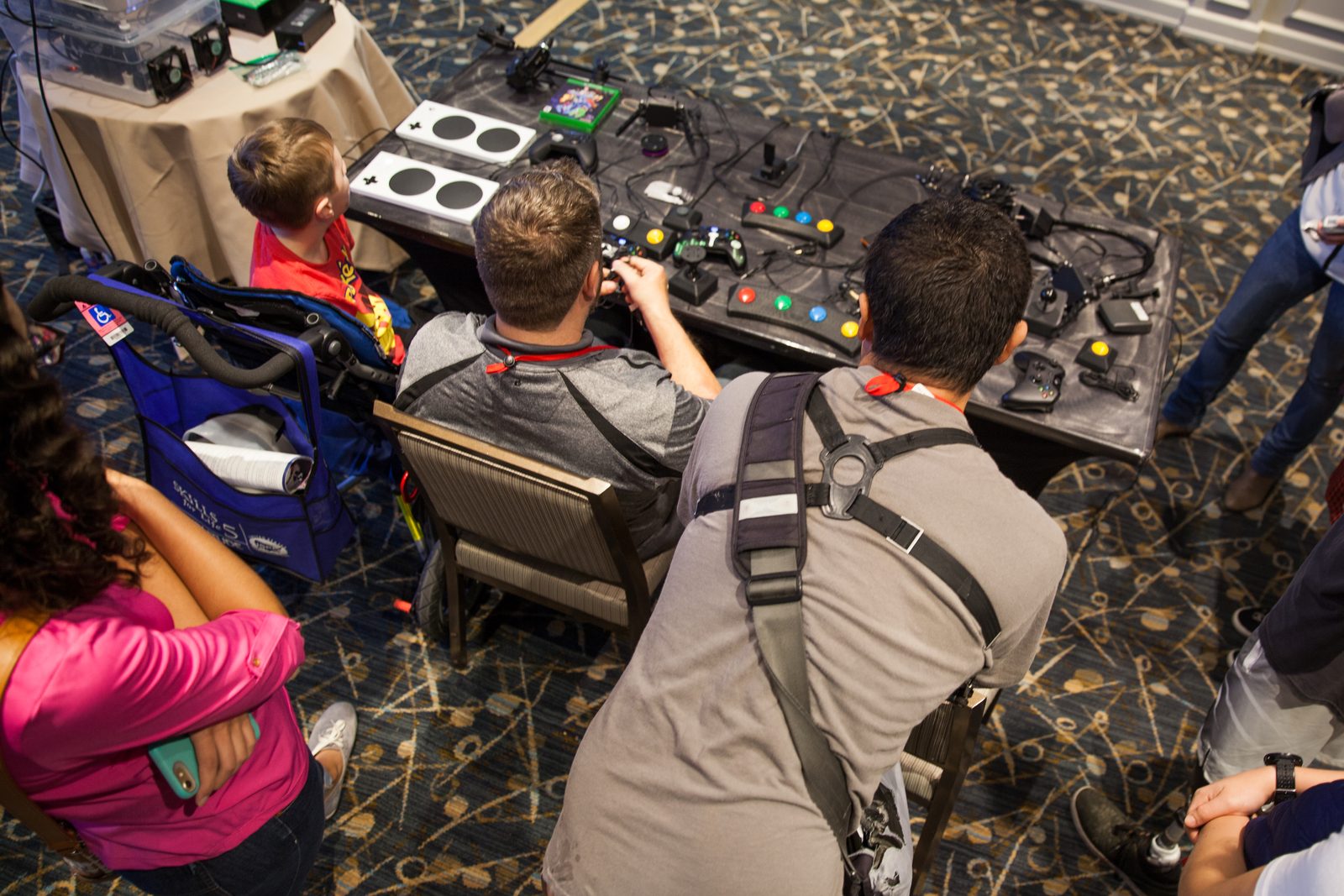
A school-based OT runs a weekly gaming group where every game choice serves a goal on somebody's IEP: an adaptive controller setup that turns gameplay into fine-motor practice, a cooperative game that exercises turn-taking and frustration tolerance, a strategy game graded for planning and working memory.
The same clinician consults on the school's esports club so students with disabilities can join, with the right hardware and accessibility settings. Play is a named occupation domain in the OT practice framework, so this sits squarely inside the related-service role.
Who delivers it
Under IDEA, therapy in schools is a related service: support a student needs to benefit from their education, written into the IEP and delivered by qualified providers:
Occupational therapy
The lead related-service discipline for this work: grading games toward IEP goals in fine-motor skills, executive function, self-regulation, and social participation.
Speech-language pathology
Uses game groups for language, pragmatics, and social-communication goals written into the IEP.
Physical therapy & adapted PE
Directs active and motion-controlled play toward gross-motor and participation goals, and makes esports and gaming clubs physically accessible.
Teachers & club sponsors
Run the gaming clubs and esports teams where the momentum already is; trained related-service providers connect that momentum to student goals.
The skills gap
Here is where the field stands: gaming clubs are spreading through schools faster than clinician training is. Few related-service providers have been taught how to run a gaming group toward IEP goals, how to grade a commercial game for a specific student, or how to make an esports club accessible.
That gap is precisely what our training fills, so the enthusiasm already in the building becomes a documented service that moves student goals.
Where the evidence stands
Play and leisure are named occupation domains in the OT practice framework. That is the profession's own ground for this work.
Research on specific school outcomes is still emerging, so what carries a student's case is progress on their own measured IEP objectives, session by session. See how we read the evidence →
How it gets paid for
School funding runs through IDEA and the IEP: therapy is a related service the district provides so a student can benefit from their education, and districts recover a portion of eligible costs through school-based Medicaid programs where state rules allow.
So the case you make in a school is written in outcomes and IEP goals: measurable objectives for motor skills, executive function, self-regulation, and social participation that a gaming group serves and a therapist documents. That is where we aim the program design, the documentation, and the training.
Bring it to your district
We train school-based clinicians to run gaming groups toward IEP goals, and we consult on adaptive esports and accessible club setups.