Where this works
Outpatient clinics
Outpatient is where game-based therapy runs at its cleanest: one clinician, one client, one graded activity, and a note that shows the skilled work. If your clinic wants a program that clients ask to come back for and billers can stand behind, this is the setting where both halves are easiest to deliver.
What it looks like in the clinic
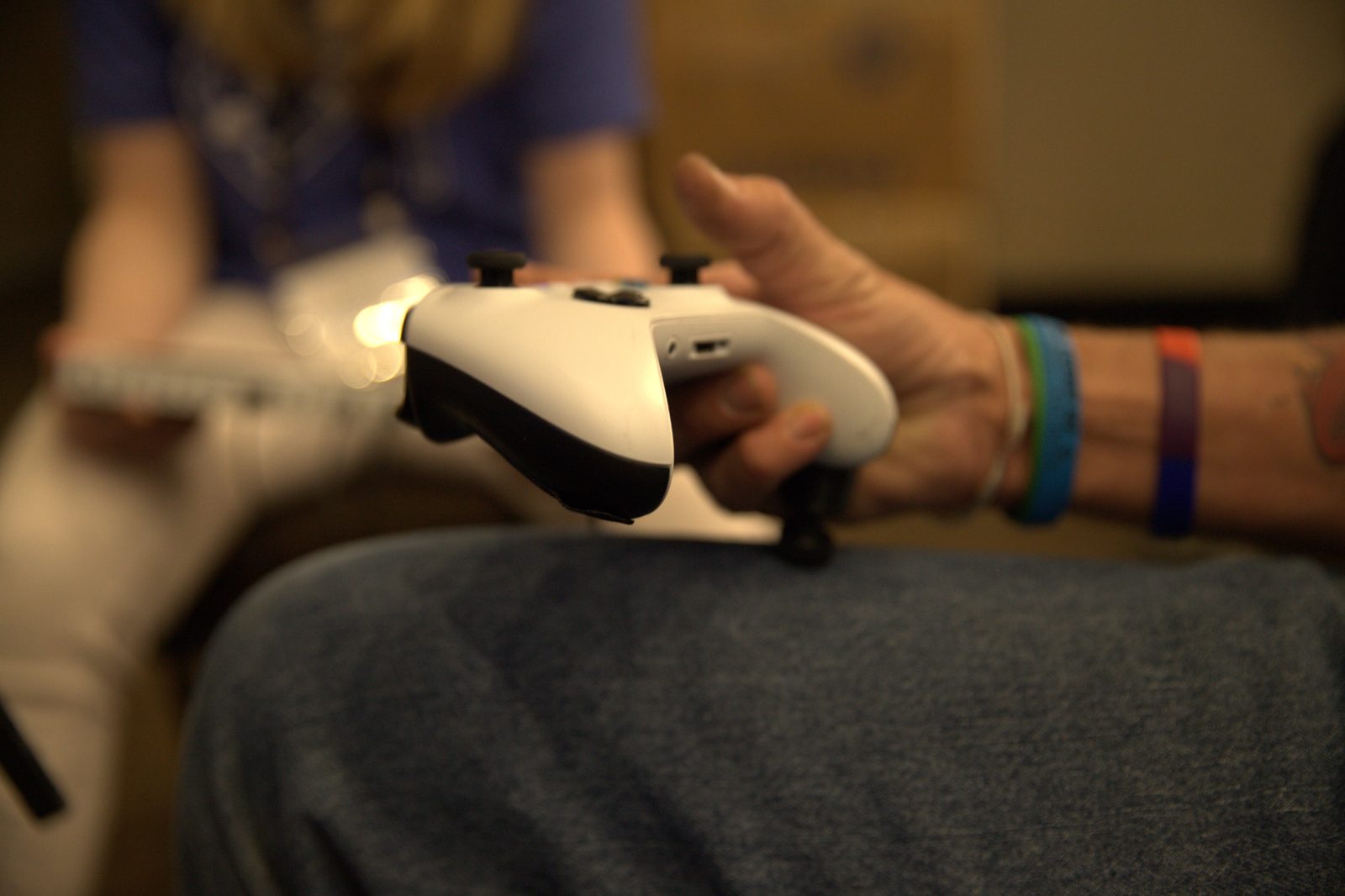
A session is direct, one-on-one, and actively skilled from start to finish. The therapist selects a game for the client's goals, sets up the input method (standard controller, adaptive controller, switches, motion control), and works through the session grading difficulty, cueing performance, and adjusting the challenge in real time.
The craft is in two places: the hands-on skilled contact during play, and the documentation afterward that captures the goal, the grading decisions, and the client's response. That pairing is what makes the session skilled therapy in the chart, and it is exactly what our training drills.
Who delivers it
Delivery here is clinician-by-clinician rather than program-wide. Each licensed discipline applies the same method inside its own scope and plan of care:
Occupational therapy
The craft this site teaches: grading a game to a functional goal, cueing through the session, and writing the note that shows the clinical reasoning.
Physical therapy
Motion-controlled and active play graded toward balance, strength, endurance, and movement-quality goals within its own plan of care.
Speech-language pathology
Game formats applied to cognitive-communication, language, and social-communication goals within its own plan of care.
Where the evidence stands
The strongest controlled evidence sits in stroke rehabilitation, where games added to usual care probably improve upper-limb function, with moderate certainty.
Elsewhere the picture is younger. Some areas have real support behind them, others are still being worked out, and every card in the library says which is which.
In practice the game is a graded activity: something a licensed clinician aims at a goal and adjusts as the patient changes. See the evidence library, with certainty labeled →
How it gets paid for
Outpatient has the cleanest funding story of any setting, because billing attaches to the therapist's skilled service under standard timed codes clinicians already use every day. Two things carry the claim: direct one-on-one contact during the session, and documentation that shows the skilled components.
The specific codes, the two Medicare constraints, and the documentation habits live on our billing and documentation page, and the free one-page cheat sheet puts them in your team's pocket. Educational information, not billing advice: your payer and MAC rules govern.
Build the program in your clinic
We train outpatient teams to deliver game-based sessions and document them defensibly, and we consult on equipment, setup, and program design.