Accessibility · Cognition

Cognition solutions

Cognition is "all forms of knowing and awareness, such as perceiving, conceiving, remembering, reasoning, judging, imagining, and problem solving" (American Psychological Association, 2023). The right settings let a player meet a game's cognitive demands on their own terms.

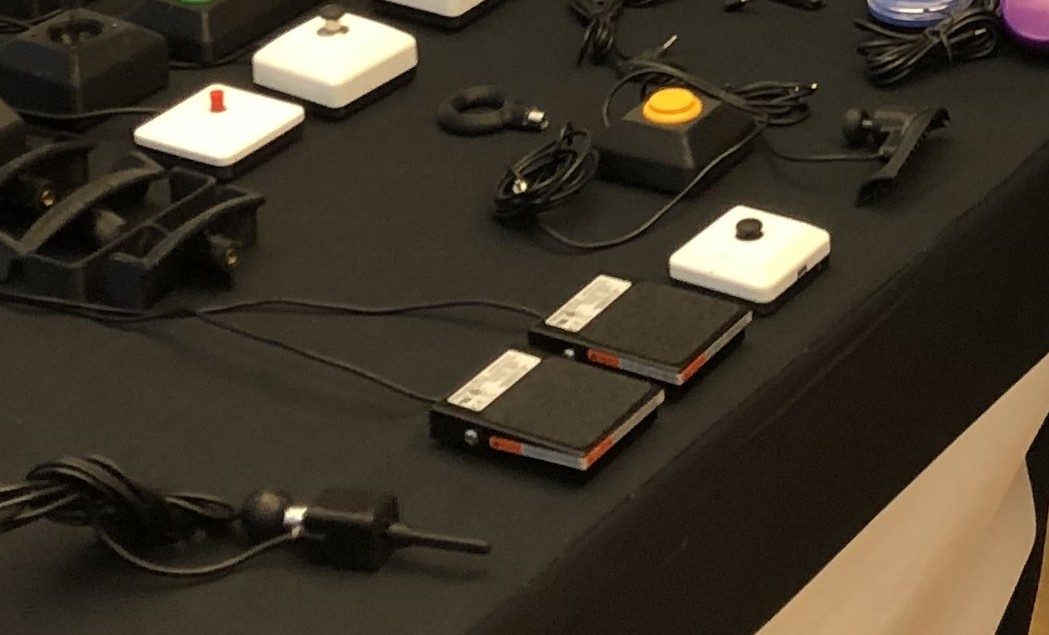
White adaptive switch boxes, small switches, and remapping hardware with cables arranged on an adaptive gaming demo table.
Real adaptive gear from a Rehab Arcade session — switches and remapping hardware.

Navigation aids

Waypoints, minimaps, and objective markers give a visual anchor for players with memory, attention, or problem-solving difficulties.

Example games: Red Dead Redemption 2 · Super Mario Odyssey (assist) · Portal 2 · Assassin’s Creed Origins/Odyssey · The Last of Us Part II

Difficulty settings

Adjustable difficulty lets a player engage at their level, reducing frustration while still exercising problem-solving.

Example games: Mega Man 11 · Dead Space 3 · Batman: Arkham Asylum · Forza Horizon 5 · Dishonored · Shadow of the Tomb Raider · XCOM: Chimera Squad

Practice modes, hints & tutorials

Safe spaces to build a skill at one’s own pace: repeated practice, contextual hints, and step-by-step instruction.

Example games: Nioh · Star Fox Zero · Super Smash Bros. Ultimate · Overwatch · The Sims 4

Dyslexia-friendly fonts

Fonts like OpenDyslexic use larger, bottom-heavy characters and wider spacing to reduce letter confusion.

Example games: The Last Door · Disco Elysium

Graphics & audio adjustments

Reducing background noise, enlarging text, and disabling motion blur / head-bob minimizes sensory overload.

Example games: Stardew Valley · Doom Eternal · The Last of Us Part II · Borderlands 3 · BioShock

Want hands-on help?

Stuck on a particular player, setup, or program? Tell us what you are working with and we will come back to you by email.

Email only, no phone. Unsubscribe anytime.