For clinicians
Master game-based therapy
Turn the games your clients already love into skilled therapy that is purposeful, documentable, and defensible. Anchored in occupational therapy practice and built for clinicians across occupational therapy, recreational therapy, physical therapy, and speech-language pathology. This is where you learn to deliver it with confidence.
Why learn game-based therapy
Already in your scope
Play and leisure are named occupation domains in the OT practice framework. This is core OT, delivered in a way clients love.
Billable today
Standard CPT and RTM codes already cover the skilled service you provide. The rails exist. You just deliver.
Built to hold up
Our training is designed around the two things that make game-based therapy defensible in the chart.
Which discipline are you?
Occupational therapy is the spine of this site today. Related disciplines: the core applies to you, and your dedicated track is coming.
Occupational therapy
Everything on this site applies to you today: the method, the evidence, and the billing and documentation guidance are written for OT practice.
Start with the method ↓Recreational therapy
The method and evidence here apply broadly to recreational therapy practice today. Billing specifics on this site are anchored in OT practice for now, and a recreational therapy track is on the roadmap.
Speech-language pathology
The method and evidence here apply broadly to speech-language pathology practice today. Billing specifics on this site are anchored in OT practice for now, and an SLP track is on the roadmap.
Physical therapy
The method and evidence here apply broadly to physical therapy practice today. Billing specifics on this site are anchored in OT practice for now, and a PT track is on the roadmap.
Email only, no phone. We'll message you when your discipline's track opens; unsubscribe anytime. Privacy Policy.
Four formats, one method
The method is cross-format: the skill is in the grading, not the platform.
Video games
Console, PC, and motion-controlled titles graded for motor, cognitive, and participation goals.
Virtual reality
Immersive environments used to increase therapy dose and rehearse real-world tasks.
Tabletop & role-playing
Board games and TTRPGs for cognition, communication, executive function, and social participation.
Physical & active play
Movement-based play that targets strength, range of motion, balance, and endurance.
Grading and adapting the game
Grading is the craft at the center of the method: adjusting a game's demands so it sits at the client's therapeutic edge, and moving it as they progress.
These are the levers you have:
- Difficulty settings, and the pacing and timing windows a game allows.
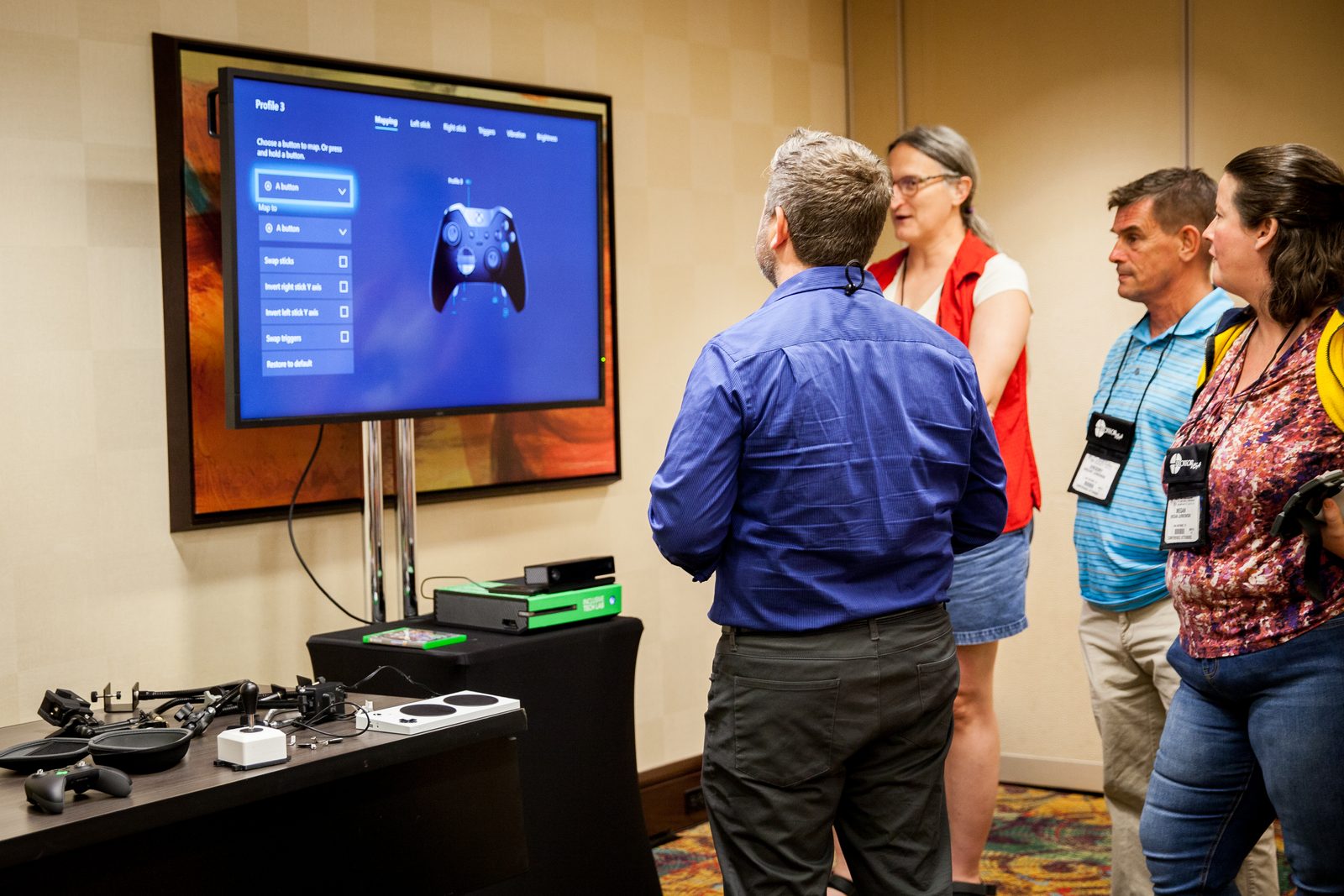
- Input method: adaptive controllers, switches, one-handed layouts.
- Cognitive load: navigation aids, hints, reduced clutter.
- Sensory settings: contrast, captions, motion reduction.
- The social structure of play: alone, alongside, or together.
Our accessibility section catalogs the concrete settings and hardware by domain: motor control, cognition, vision, and hearing.
Play and leisure are named OT occupation domains
The AOTA Occupational Therapy Practice Framework, 4th edition (OTPF-4, 2020) defines the profession's domain as nine occupation categories: ADLs, IADLs, health management, rest and sleep, education, work, play, leisure, and social participation.
Play is defined as activity that is "intrinsically motivated, internally controlled, and freely chosen." The framework holds that occupations are "both the means and the end" of the occupational therapy process, and directs practitioners toward interventions that are purposeful and occupation-based.
That has a simple, load-bearing consequence: because occupational therapy is defined by occupations like play, a licensed OT can use a game as a therapeutic activity with no FDA clearance required. Regulation attaches to the licensed therapist and the skilled service you provide, which is exactly what you already bring to every session.
Source: AOTA OTPF-4 (AJOT, 2020) ↗
Means and end. A game can be the means (the graded activity that builds a targeted skill) and the end, when returning to play or leisure is itself the goal the client values. Both are inside scope.
Billing & documentation
The CPT and RTM codes, the two Medicare constraints, and the documentation habits that make game-based therapy defensible in the chart now live on their own page.
Learn to deliver it and document it
Our training is built around game-based therapy that is engaging for the client and defensible in the chart.