For families
Games in therapy, explained simply
Maybe someone you love had a stroke, an injury, or lives with a disability, and you've heard that games can help with recovery. This page explains what that really means, in plain words, and how to find the right professional.
What is game-based occupational therapy?
Occupational therapists (OTs) help people do the everyday activities that matter to them: getting dressed, using their hands, thinking clearly, playing, and taking part in life. Play is one of those activities. So a trained OT can use a video game, a virtual-reality activity, or a board game as a tool inside therapy.
Here's the key idea: the game is a tool the therapist uses. It works best added to regular therapy: a fun way to do more of the right practice. It is not a treatment on its own, and it does not replace a therapist, a doctor, or their advice.
A good sign to look for: a therapist who picks a game for a reason, adjusts it to the person, and can explain what skill it's helping with. That's the skill you're paying for, not the game itself.
What you can ask a therapist
- Could a game help with the skills we’re working on, like using a hand, thinking through steps, or staying motivated?
- How would you use a game in a session, and how would you make it easier or harder for me?
- Can we keep some of this going at home between visits?
- What are we hoping to see change, and how will we know it’s working?
How to find a licensed occupational therapist
Occupational therapists are licensed in every U.S. state. To find one:
- Contact an occupational therapy clinic directly, or ask your doctor or hospital for a referral. In many states you can reach out to an OT on your own; in some, a doctor's referral is needed before treatment can start. The clinic can tell you what applies where you live, so it's worth simply calling and asking.
- Check your state's licensing board, or the American Occupational Therapy Association, to confirm a therapist is licensed: AOTA state licensure ↗.
- Ask whether telehealth (therapy by video) is an option. It can widen your choices. A newer "OT Licensure Compact" is starting to make it easier for therapists to work across some state lines.
Please read this. The Rehab Arcade provides educational information and resources. It does not provide occupational therapy, medical advice, diagnosis, or treatment. Consult a licensed occupational therapist or physician about your specific situation. If something is urgent or you're worried about someone's safety, contact a doctor or emergency services.
Where to go next
If your loved one can't use a standard controller, games can still be within reach. Our free accessibility guides explain adaptive controllers, switches, and the in-game settings for motor control, vision, hearing, and thinking — written plainly, and free for everyone, with no membership needed.
Explore the free accessibility guides →
Wondering what the science actually says? Read what the research says, in plain words — an honest, jargon-free summary with trusted links. And to understand the method the way a clinician does, you're welcome to read our method page too.
Image credits
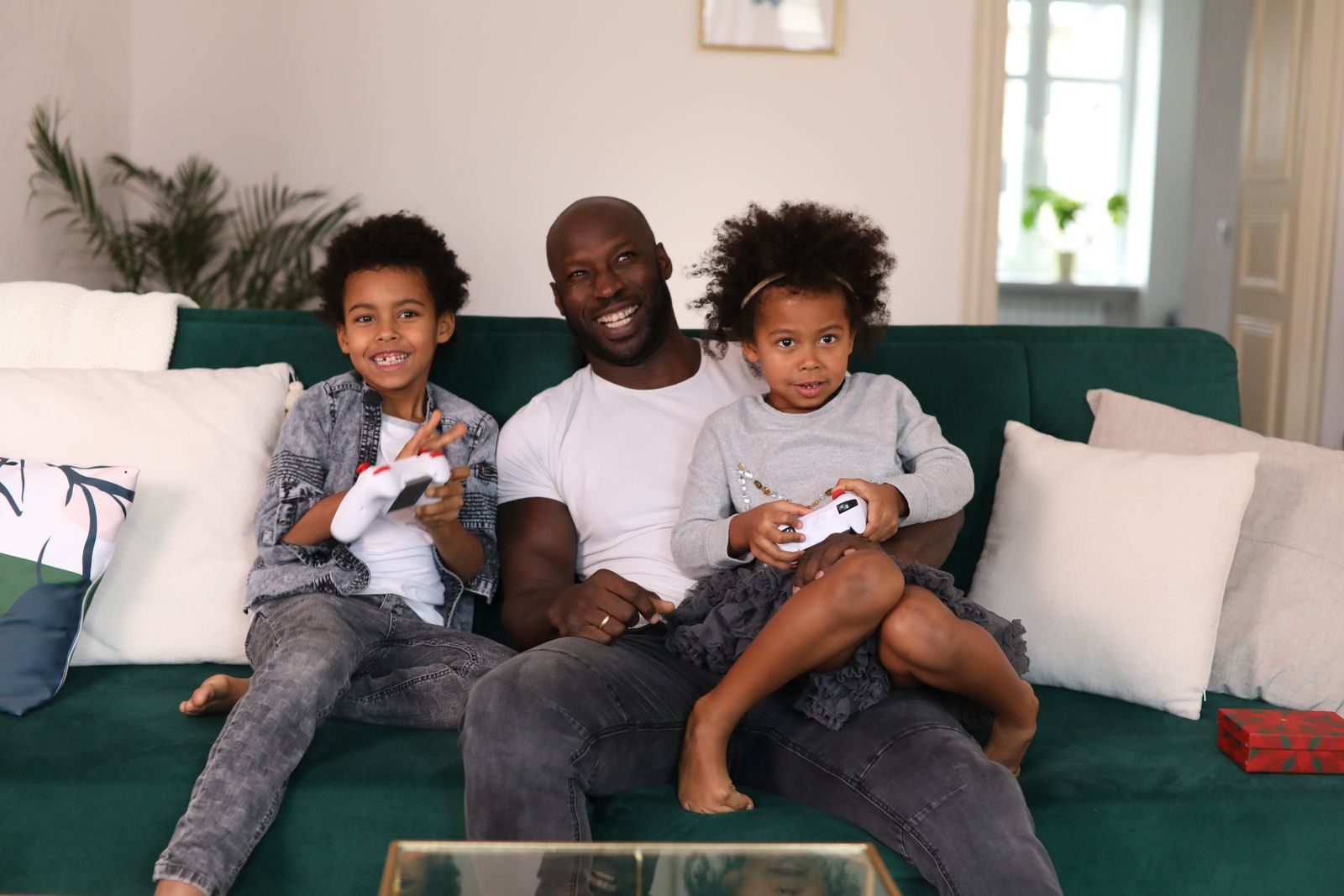
- Family photograph: photo by KoolShooters, used under the Pexels licence. Source.