Where this works
Hospitals & inpatient rehab
Inpatient rehab runs on intensity: hours of therapy a day, delivered by a coordinated team. Game-based practice earns its place here as a dose extender. Added on top of usual care, it increases the amount of the right practice a patient gets, and it keeps patients engaged through repetitions that would otherwise wear thin.
What it looks like on the unit
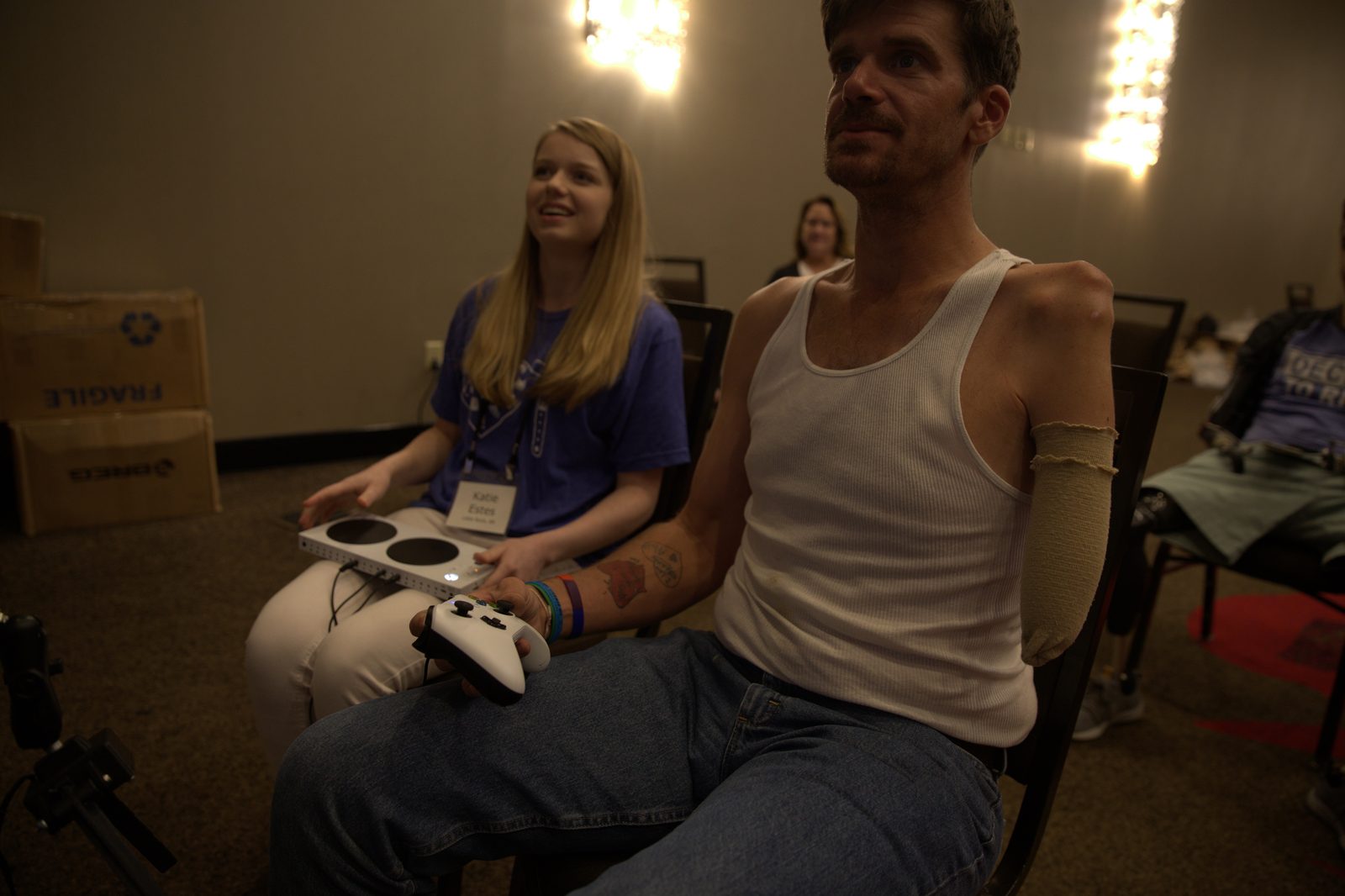
A therapist sets up a motion-controlled or adaptive-controller game in the rehab gym or at the bedside, grades it to the patient's goals, and works one-on-one through the session: cueing, adjusting difficulty, and progressing the challenge as the patient improves.
The same setup supports supervised practice blocks run by the wider team between skilled sessions, so the patient's total practice dose goes up without adding staff hours. The clinician stays the skilled agent throughout; the game is the graded activity.
Who delivers it
Inpatient rehab is a team sport, and game-based practice fits the whole roster. Each licensed discipline works inside its own plan of care and scope:
Occupational therapy
Leads goal-setting and grading: choosing the game, the input method, and the difficulty so practice sits at each patient's therapeutic edge and carries over to daily activities.
Recreational therapy
Runs the engagement and leisure programming that keeps patients active between skilled sessions, as part of the facility's rehab program.
Physical therapy
Uses motion-controlled play for balance, endurance, and lower-limb practice inside its own plan of care.
Speech-language pathology
Applies game formats to attention, memory, language, and social-communication goals.
Where the evidence stands
This is the setting with the strongest evidence behind it.
A 2025 Cochrane review pooled 190 randomized trials and 7,188 patients. When gaming was added on top of usual care, extending how much therapy a patient actually did, upper-limb function improved, with moderate certainty. Adverse events were few and mild.
The profession's 2023 stroke guideline still reserves its highest ratings for conventional task-oriented work. So the fair reading is a promising adjunct inside skilled therapy, and the clinician remains the skilled part of the session. Read the primary sources in the evidence library →
How it gets paid for
Inpatient rehab payment is bundled: the facility receives a prospective payment for the stay, and therapy is delivered inside that payment rather than billed visit by visit. So the case for game-based practice here is clinical and operational: more productive practice inside the therapy minutes you already staff, higher patient engagement, and documentation that shows the skilled work.
Recreational therapy contributes as program staff within that bundle, while separately billed skilled therapy stays with the licensed OT, PT, and SLP plans of care. We keep the funding story this plain because your compliance team will ask about it first.
Bring it to your rehab unit
We train inpatient teams to deliver and document game-based practice, and we help facilities design programs that survive a compliance review.